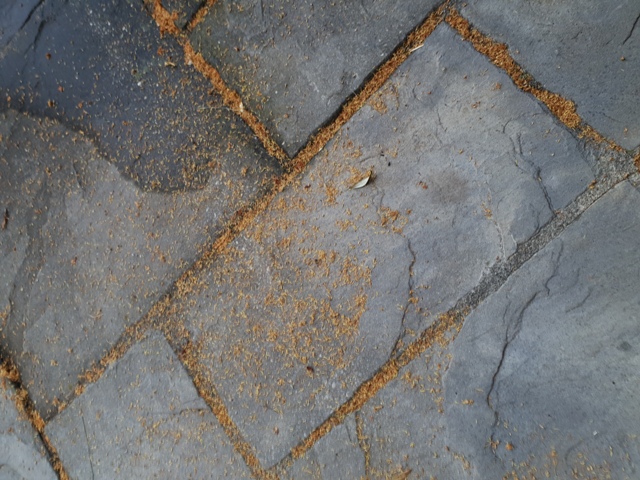
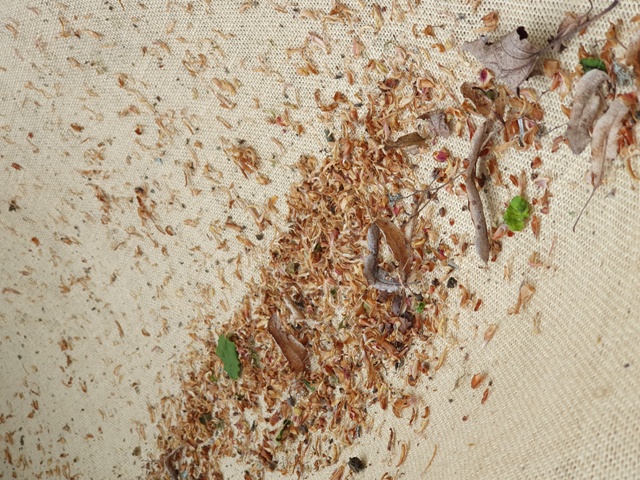
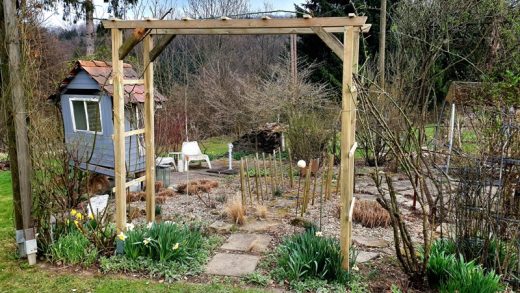
As much as I love the ancient and huge linden tree in my yard, as much I loathe it some days. It does produce a lot of dirt throughout the year. It starts with the leaves which enclose the blossoms in spring, then there is the blossom dust which is followed by the stamen in early summer, in summer there will be twigs and leaves after a stormy weather, in autumn the leaves will be shed and in winter at last the fruits which make a crackling sound when being stepped on.
I try to see it as my weekly meditation exercise, like a Zen monk sweeping the courtyard.
And it reminds me of a party a very long time ago in The Bahamas. The Austrian owner of the apartment block I lived in celebrated his birthday with a poolside party. Among the guests was Helmut Swiczinsky, one of the founders of Coop Himmelb(l)au. Out of courtesy I meant to stay for a couple of hours but at then found myself after midnight discussing Wabisabi, Zen Buddhism and social romanticism. And Helmut Swiczinsky told following story about sweeping the courtyard:
“Rikyu was watching his son Shoan as he swept and watered the garden path. “Not clean enough,” said Rikyu, when Shoan had finished his task, and bade him try again. After a weary hour the son turned to Rikyu: “Father, there is nothing more to be done. The steps have been washed for the third time, the stone lanterns and the trees are well sprinkled with water, moss and lichens are shining with a fresh verdure; not a twig, not a leaf have I left on the ground.”
“Young fool,” chided the tea-master, “that is not the way a garden path should be swept.” Saying this, Rikyu stepped into the garden, shook a tree and scattered over the garden gold and crimson leaves, scraps of the brocade of autumn!” – Kakuzō Okakura, The Book of Tea
But sometimes the sweeping reminds me also of my grandmother, sweeping the courtyard vigorously herself. And I wonder about her thoughts while sweeping the yard.